
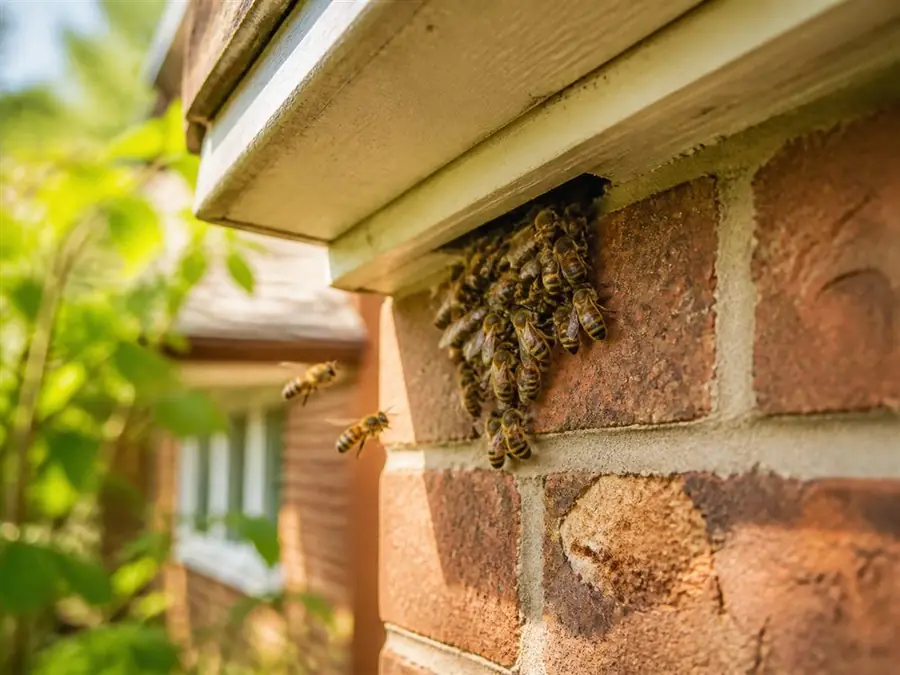
Flying insects entering the same gap repeatedly can cause concern, but the right response depends on what the insects are and where they are nesting. Bees and wasps behave differently, and correct identification should come before treatment decisions.
Observe from a safe distance
Note the insects’ colour, body shape and flight pattern without standing directly in their route. Also record the entry point and the busiest time of day. A clear photo taken with zoom may help, but do not seal the opening, spray the entrance or attempt to disturb a nest.
Why identification changes the advice
Some bee species are valuable pollinators and may only be using a location temporarily. In suitable situations, specialist advice or relocation may be more appropriate than treatment. Active wasp nests in sensitive or frequently used areas can require a different risk assessment.
The position of the activity matters as well. An exposed garden nest, a roof void and an air brick each present different access and safety considerations. Activity near children, pets, customers or people with known allergies should be treated with particular caution.
Information to share with a pest controller
Provide your postcode, the exact location of the entrance, how long the activity has been present and whether the area can be safely accessed. Mention any previous attempts to block or treat the opening.
Our Kent team can help identify the likely insect and explain the suitable options. Keep people and pets away from the immediate flight path while you wait for advice.