
Rat droppings
Dark, capsule-shaped droppings may appear along routes, near food or in sheltered areas.
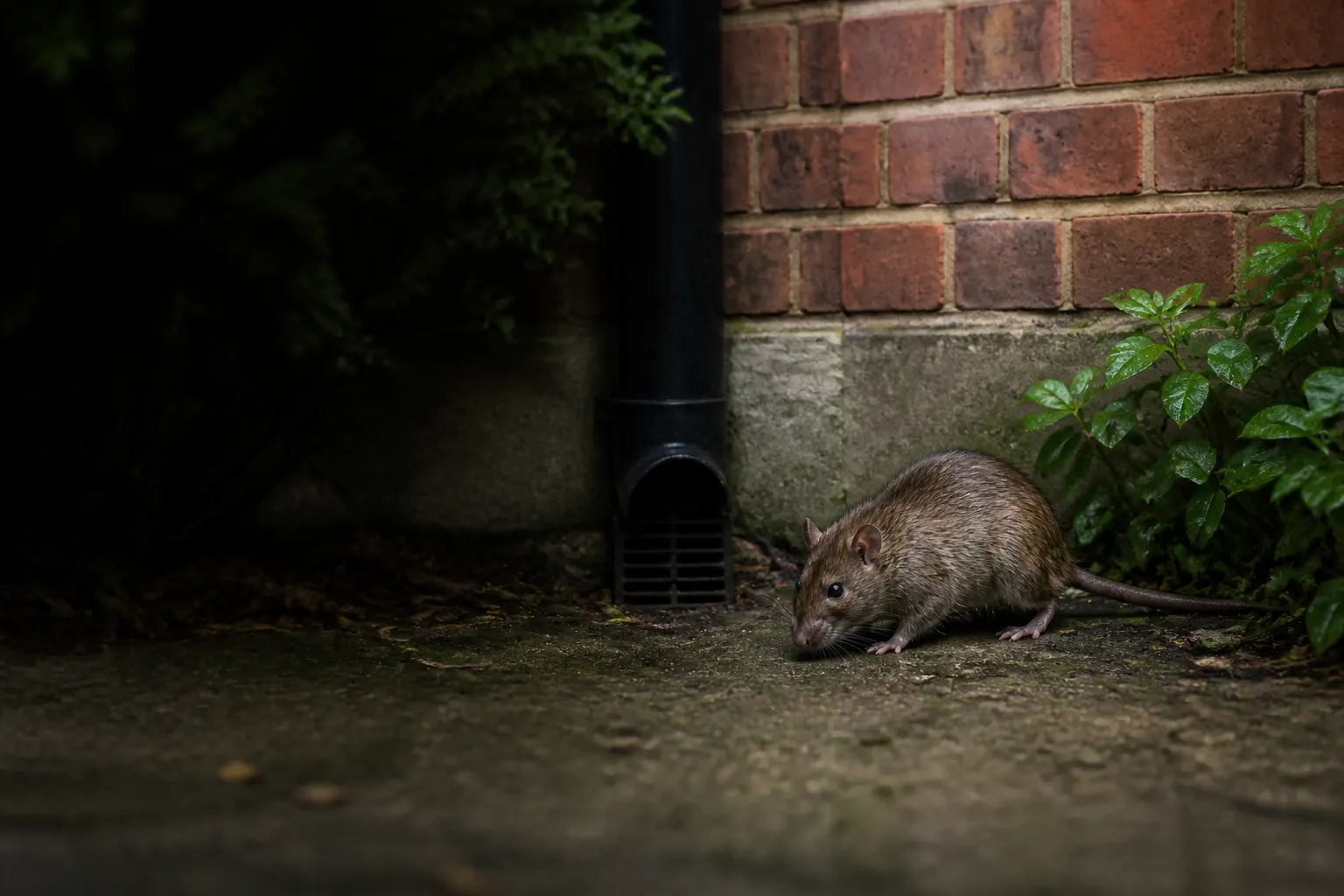
Rat control for Kent homes and businesses
Inspection-led help with rat activity around homes, lofts, gardens, drains, farms and commercial premises across Kent.
Understanding the problem
The brown rat (Rattus norvegicus) is commonly associated with drains, sewers, farms, waste areas and places where food or shelter is readily available. Rats can also enter domestic lofts and wall voids through defects around drains or the building exterior.
Because rats are cautious, intelligent and often active out of sight, an inspection should consider the evidence, likely food and water sources, access routes and the surrounding property rather than focusing on one sighting alone.
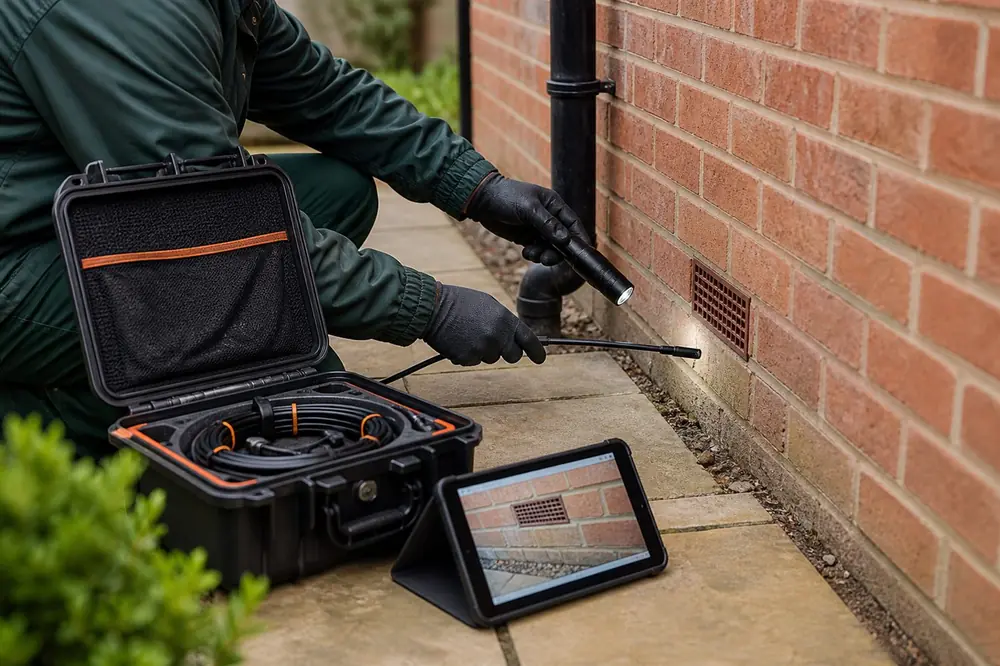
What to look for
Rats may remain hidden in drains, voids, vegetation or quiet storage areas. Record where evidence appears and whether activity is indoors, outdoors or connected to drainage.
Dark, capsule-shaped droppings may appear along routes, near food or in sheltered areas.
Fresh marks can affect packaging, timber, plastic pipework, cable coverings and stored items.
Scratching or movement may be heard in lofts, ceilings, walls or beneath floors.
Repeated tracks, smears, burrows or gaps may indicate established movement around a property.
Why investigate promptly
Inspection-led help with rat activity around homes, lofts, gardens, drains, farms and commercial premises across Kent. The effect on a property depends on the pest, level of activity and area involved.
Evidence around kitchens, stores, waste or preparation areas needs prompt assessment.
Gnawing may damage electrical cable coverings or plastic water pipes, creating avoidable property risks.
Drain faults, service gaps and structural openings can allow activity to continue out of sight.
Rats can breed throughout the year when shelter, food and water remain available.
How the service works
The recommendation is based on the evidence, affected areas, access and how the property is used.
✓Share your postcode, property type, where activity occurs and what you have seen, heard or found.
Request Rat control →Describe the signs, timing, rooms or external areas involved.
Evidence, likely sources, access routes and property conditions are considered.
Suitable treatment, preparation and safety requirements are discussed.
Follow-up and practical prevention advice is provided where relevant.
Inspection and treatment
The control plan should reflect whether rats are using drains, external areas, a loft, wall voids or food-related premises. Recommendations follow the inspection and are explained before work proceeds.
Share sightings, droppings, noises, damage and any known drain or building defects.
Likely routes, harbourage, food sources, water and property vulnerabilities are assessed.
Suitable control, monitoring and access requirements are explained for the setting.
Follow-up, drainage investigation or proofing advice is discussed where relevant.
Yes, where the evidence suggests a drainage connection or rats are entering through a defect, further drain investigation may be recommended.
Using rodenticides without understanding access, safety and non-target risks can create additional problems. Discuss the evidence before applying products.
Likely access routes and suitable proofing considerations can be discussed once active movement and building conditions are understood.
Before and after the visit
You do not need to disturb a suspected nesting or feeding area. Useful observations and safe access to the affected spaces are more helpful.
Secure stored food, bird feed and rubbish and clean spilled material around accessible areas.
Investigate damaged drains or sewer connections when the pattern of activity suggests a fault.
Close suitable gaps and door defects at the appropriate stage after active routes have been assessed.
Domestic and commercial support
Rat activity can affect houses, farms, rental property, hospitality, retail, food storage and managed buildings. The inspection and reporting should reflect how the premises are used.
Discuss a property →

More pest control services
Different pests can create similar signs. If identification is uncertain, share a photograph or describe the evidence so the relevant service can be recommended.
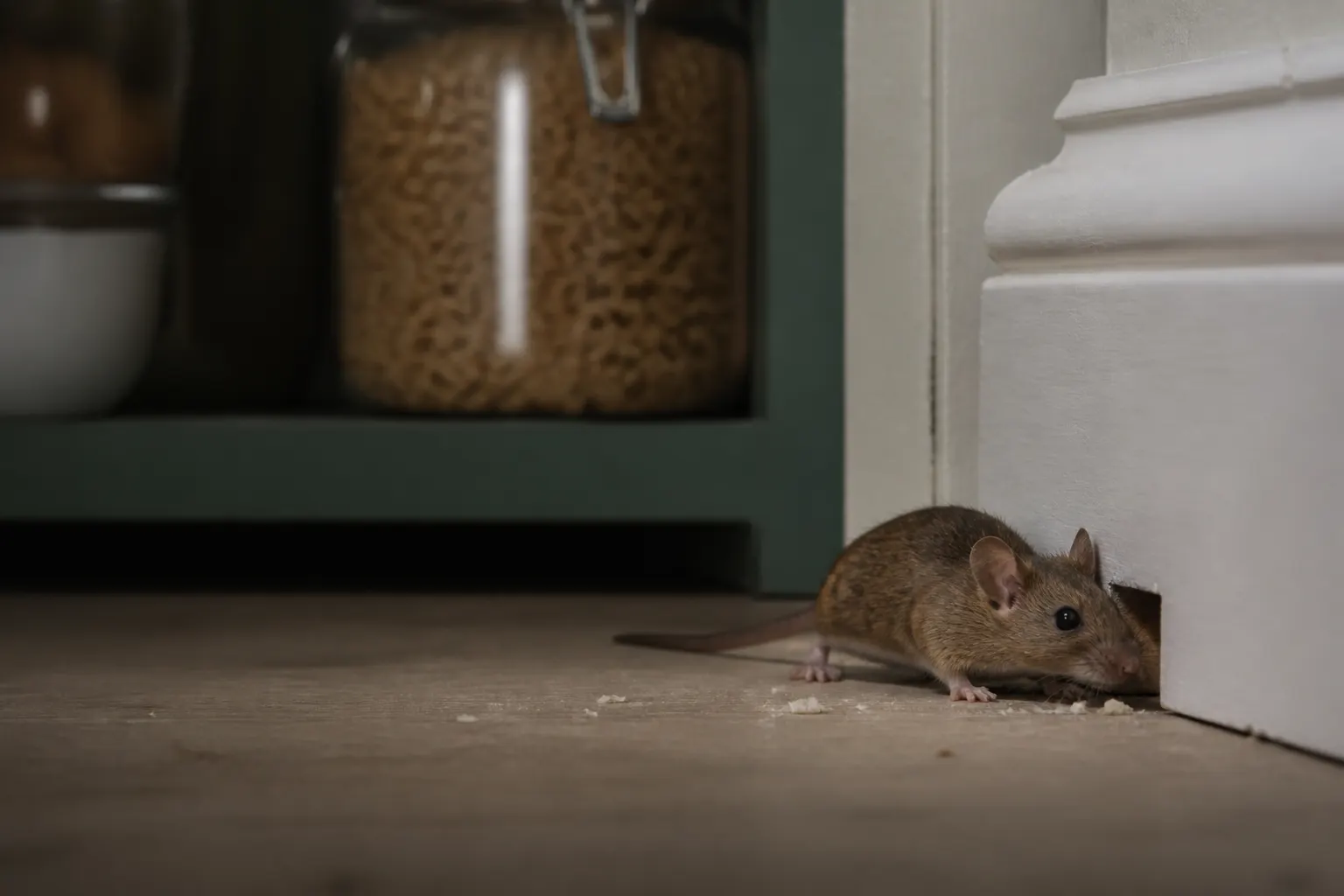
Help with house mice, droppings, scratching and gnawing in kitchens, wall cavities, lofts, storage areas and commercial premises.
View Mouse control →
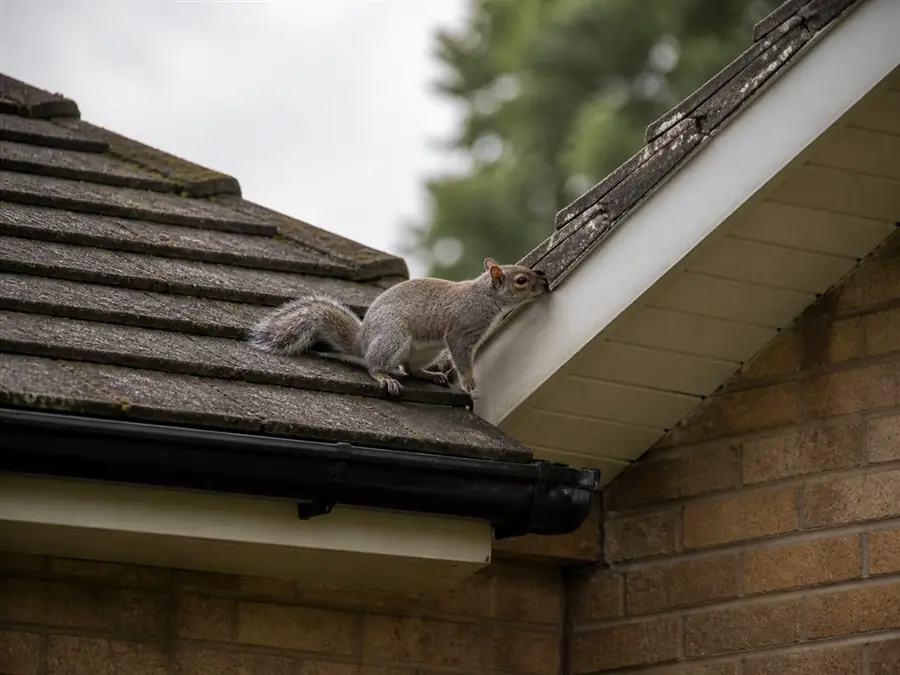
Help with squirrels entering lofts, roofs and other buildings.
View squirrel control →
Professional help with ants, cockroaches, flies, moths and other crawling or flying insects in homes and commercial premises.
View Insect control →Local service coverage
Kent Pest Control supports properties throughout the county. Share your postcode and the affected area to confirm the appropriate next step.
Check your postcode →⌖Outside these towns?Send your postcode to check coverage across Kent and surrounding communities.
Rat control FAQs
Call the team if your activity, access or safety concern is not covered below.
Call 07534 003 009 →Accessible food, waste, water, shelter and building or drainage defects can all contribute. Bird seed, compost, bin areas and ponds may also support activity.
Routes vary, but defects around drains, service openings, roofs and adjoining structures may provide access. An inspection helps identify the likely route.
Yes. Gnawing can affect cable coverings, plastic pipework, timber and stored goods, so visible damage should be reported.
Share the postcode, property type, where evidence appears, when activity began and any known drain, waste or building issues.
Yes. Support is available for domestic and commercial premises, subject to the location, access and nature of the activity.
Request Rat control
Share your postcode, property type, where activity occurs and the signs you have noticed. Calling is usually quickest for an immediate concern.